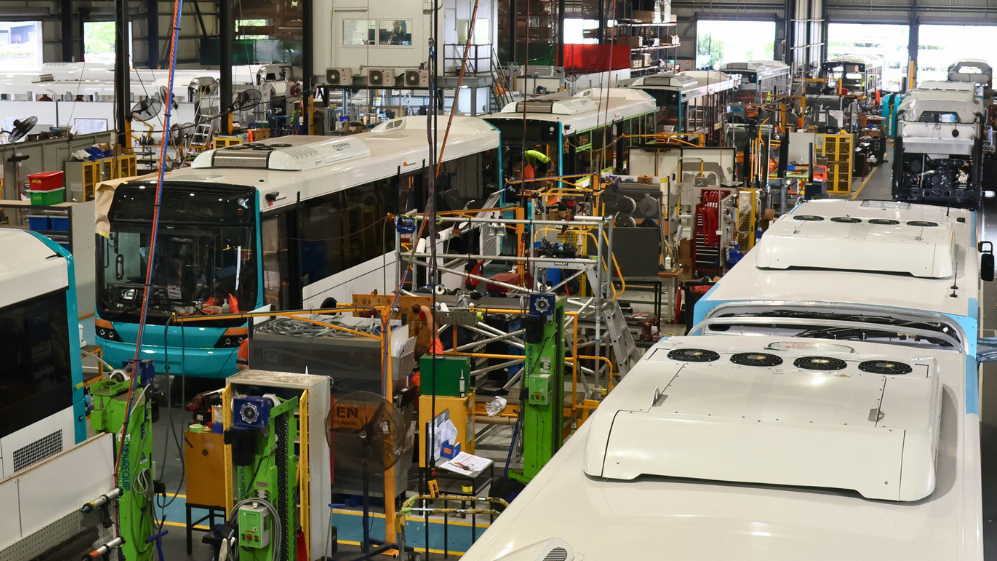
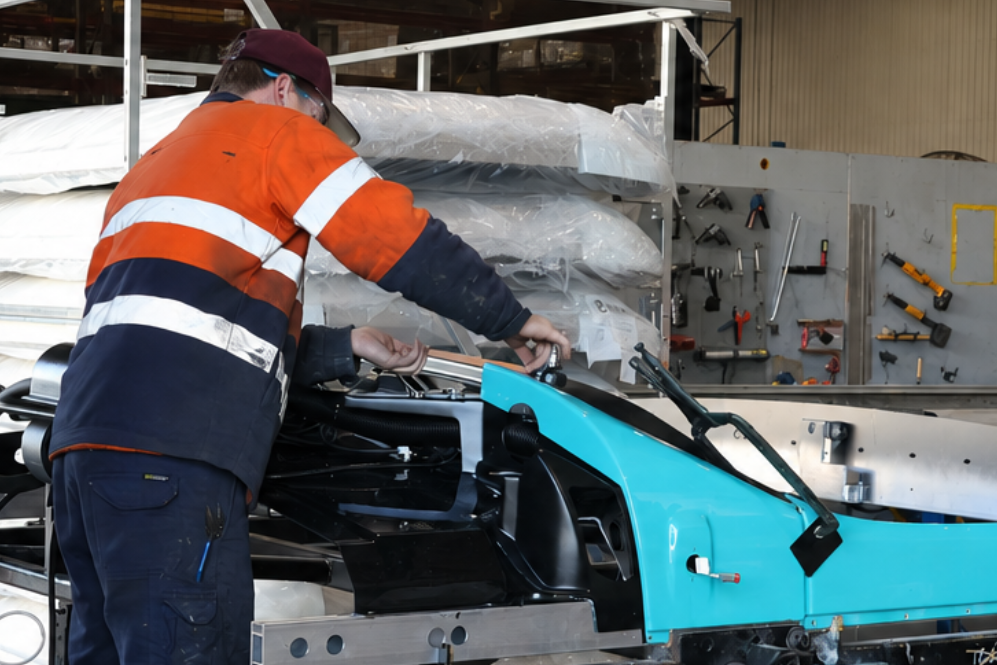
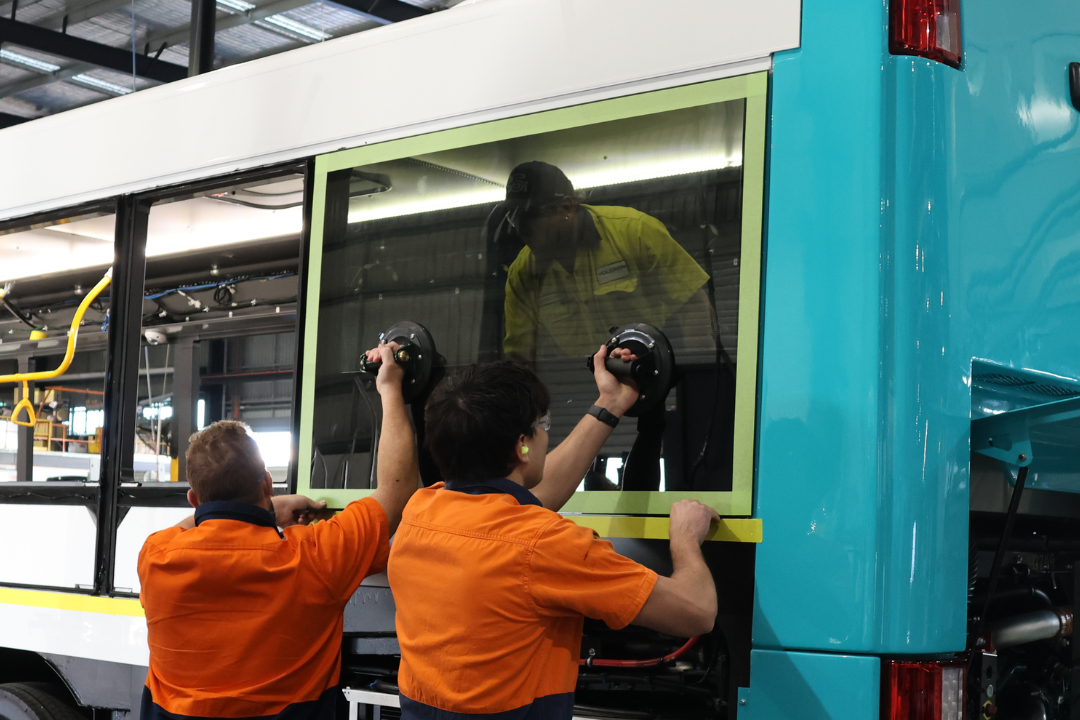
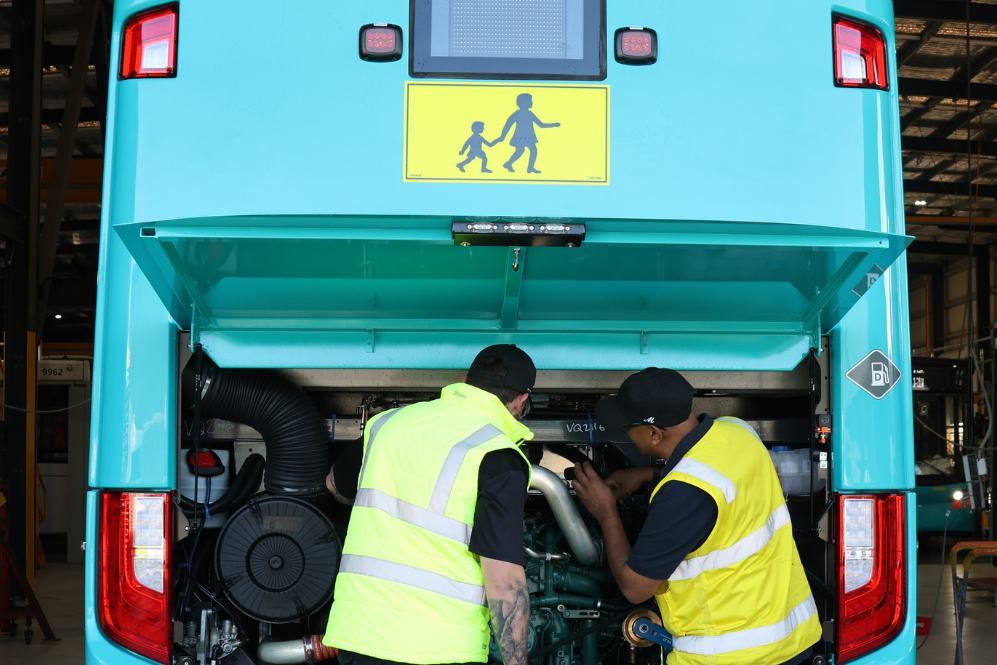
From rigid and school buses, articulated and zero-emission vehicles, Volgren’s Eagle Farm facility has developed into a highly versatile manufacturing operation supporting major transport programs across Queensland and Australia.
Established in 2009 following a major contract with Brisbane City Council, the facility gave Volgren a permanent manufacturing presence in Queensland and created the foundation for continued investment in local people, skills and production capability.
Since opening, the site has completed more than 2,000 locally built buses, including nearly 1,000 vehicles delivered to Brisbane City Council.
Today, the Queensland operation can support conventional rigid buses, school buses, articulated vehicles, battery-electric buses, hydrogen fuel-cell vehicles and advanced high-capacity transport solutions, reflecting how significantly the facility has developed over the past 17 years.
Production has increased significantly in recent years, with approximately 520 buses manufactured between 2021 and 2025, including 407 for the Queensland market. Almost 200 of these vehicles were delivered for the Department of Transport and Main Roads across 2024 and 2025.
Annual output has grown from around 60 buses in earlier years to a record of more than 180 in 2024, with the facility now capable of manufacturing more than 250 vehicles each year for customers in Queensland and interstate.
Volgren CEO, Thiago Deiro said the growth of the Eagle Farm operation reflected sustained investment in local people, manufacturing capability and long-term customer partnerships.
“The development of our Queensland facility demonstrates what can be achieved through continued investment in Australian manufacturing and local skills,” Mr Deiro said.
“Since opening in 2009, the operation has evolved significantly. Today, our team can support major fleet programs and manufacture a broad range of vehicles, from conventional route buses through to articulated and zero-emission transport solutions.
“This capability is underpinned by the expertise of our people and the strong partnerships we have developed with customers, technology partners and local suppliers.
“With annual capacity exceeding 250 vehicles, our Queensland operation is well positioned to continue supporting the changing needs of public transport networks across Australia.”
The expansion of the facility has been supported by significant workforce growth.
From approximately 60 employees in 2019, the Queensland team had grown to around 160 people in 2026.
This has strengthened local expertise across manufacturing, engineering, quality assurance, logistics, project delivery and aftersales support, while creating skilled employment opportunities within Queensland’s manufacturing sector.
As the workforce and production capacity have grown, so too has the range and sophistication of the programs undertaken at Eagle Farm.
A dedicated articulated-bus production line has supported the manufacture and delivery of more than 60 vehicles, with additional projects now underway, including the first electric articulated buses to be built at Eagle Farm.
The Brisbane Metro project further demonstrated the site’s ability to support complex, high-capacity vehicle programs, with the Queensland team completing final assembly of 58 bi-articulated electric vehicles developed in partnership with Swiss manufacturer HESS.
The project brought together international vehicle technology and local manufacturing expertise, with the Eagle Farm team supporting final assembly, quality assurance and ongoing lifecycle requirements.
The facility is also contributing to Queensland’s transition towards zero-emission public transport.
Close to 50 Volgren battery-electric buses are now operating across the state with the Department of Transport and Main Roads, Kinetic, Keolis Downer and Transdev.
Volgren has also expanded its zero-emission expertise through the completion of two hydrogen fuel-cell electric buses, developed with Wrightbus and adapted for Australian operating conditions.
Together, these programs demonstrate the facility’s ability to integrate different vehicle configurations, chassis platforms and propulsion technologies while delivering buses tailored to the needs of Australian operators and transport networks.
Continued growth at Eagle Farm has also required investment beyond the factory floor.
Volgren has worked closely with a network of more than 690 Australian suppliers to increase capacity, qualify additional partners and strengthen inbound logistics.
These partnerships help ensure that increased vehicle production contributes to a stronger Australian manufacturing supply chain while maintaining the quality and reliability required across major fleet programs.
With approximately 160 employees, annual capacity exceeding 250 vehicles and more than 2,000 locally built buses completed, Eagle Farm has become an important part of Volgren’s national manufacturing network.
Its continued development reflects Volgren’s commitment to Australian jobs, skills and manufacturing capability, while ensuring customers have access to safe, reliable and innovative vehicles that are built and supported for Australian conditions.